Background
As technology in the automotive industry continues to improve, the expectations buyers have for their new cars grow higher. The in-car experience has gone from being a motorized machine used for transportation, to a cross-channel experience which connects to the internet and various forms of communication on wheels.
Project Goal
•To design charming features for semi-autonomous vehicles that can be implemented and sold on the market in the next five to ten years.
•To collaborate on a bi-weekly basis with BNUX (Beijing Normal University) through intercultural activities and sprint handover discussions.
Timeframe
August 2021 - December 2021
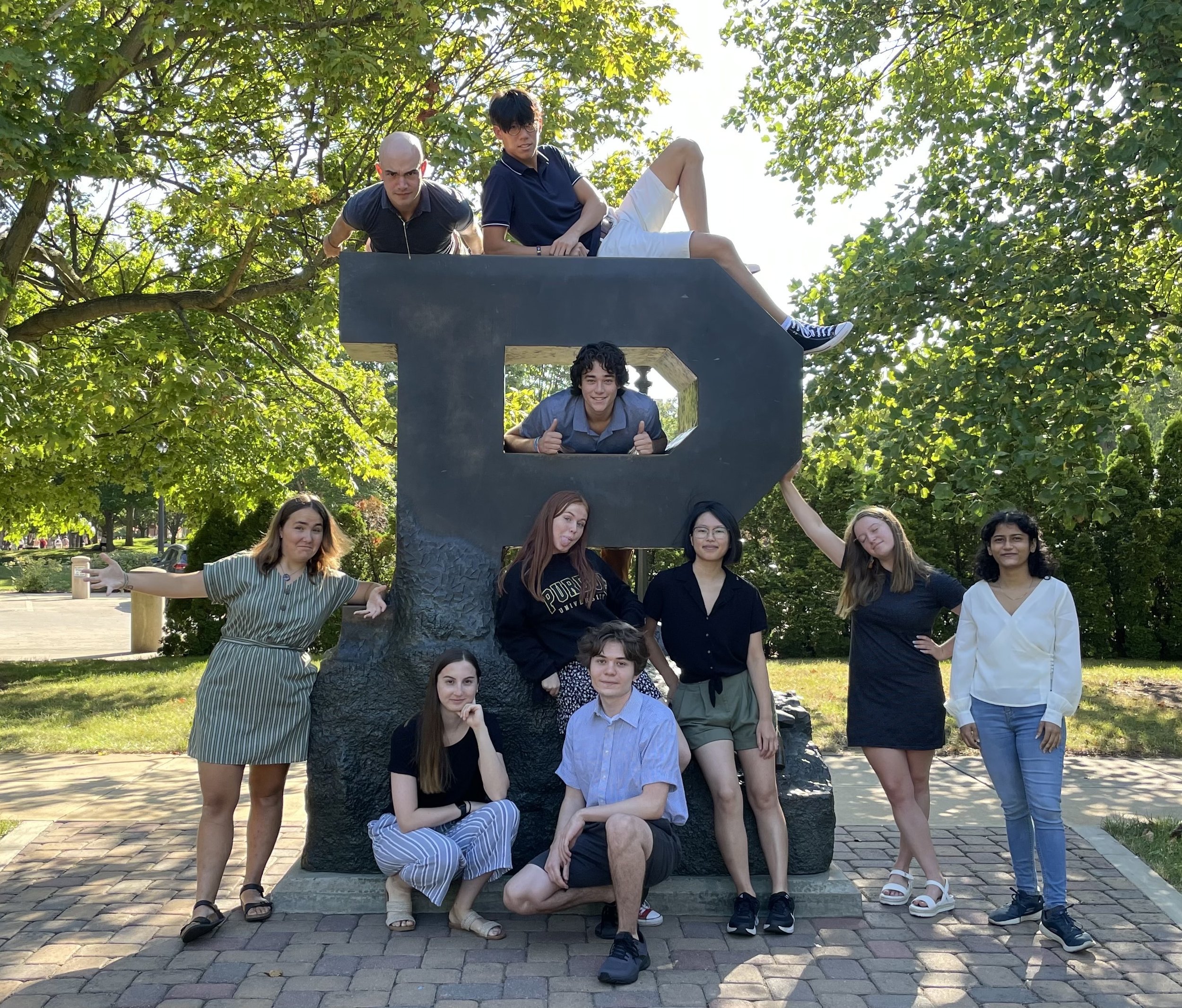
The Purdue UX Design Team
My Role & Team
Jerry Anglin - Interaction Designer
Jacqueline Marks, Rebecca Hutzel, Daniel Chin, Sadie Bunting, Samruddhi Kokate, Alanna Xu, Ethan Bartucca, Janna Johns, Andrew Johnson
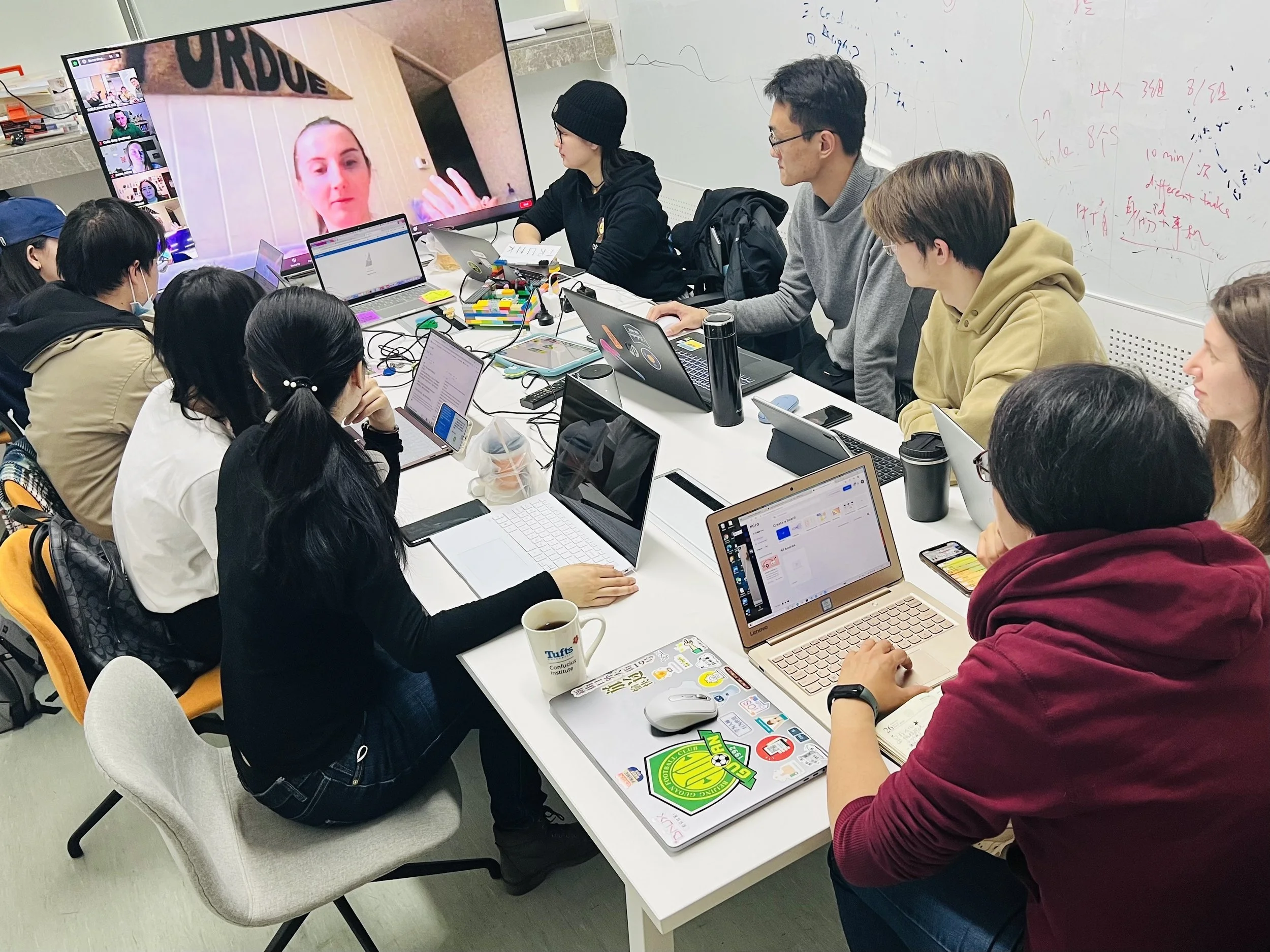
The BNUX Design Team
Before we can fully dive into the project space, we have to lay out some definitions the team used to be our compass and point of reference since the automotive space can be very technical.
Definitions
Our team used the following definition of charm and semi-autonomy throughout the ideation and creation of our designs. The BNUX team chose the word charm to describe the characteristic they desired to see most in our designs. These definitions also helped our team make cohesive designs while working in multiple design contexts.
Charm : Alluring and fascinating designs that continue to meet the user’s needs in each context.
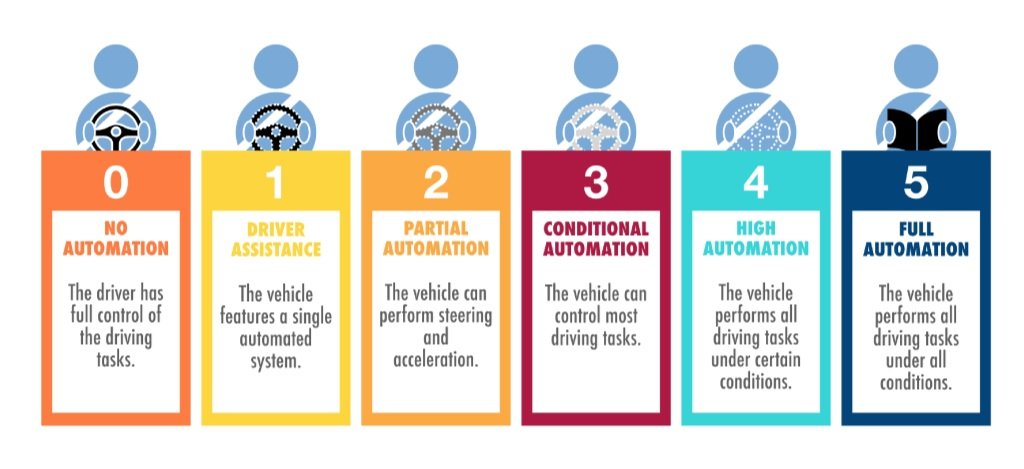
Semi-autonomous : The car’s capability to assist the driver’s decisions at various levels of autonomy.
Charm being a huge indicator for us since this project was all about inspiring and enchanting the driver’s experience.
Contexts
To achieve our project goal, we split up our work into two-week sprints. In each sprint our team focused on a single context, found in the table below. We completed four of these contexts over the course of the semester with the goal of these was to apply charm to a semi-autonomous vehicle.
These contexts were chosen in collaboration with the BNUX team. In between our bi-weekly meetings with BNUX, our team completed research, sketching, prototyping, evaluating and creating three to four final designs per context.
Taxi/Didi
Utilizes charm through an interactive taxi screen (learning), customizable taxi signage (reimagination), and a taxi photo booth (memory making).
Traffic Jams
Utilizes charm through communication with others (emotional immersion) , aromatherapy and lighting (personalization), and a rhythm game (learning).
Night Driving
Utilizes charm through a holographic AR experience (emotional immersion), connection to constellations (learning), and immersive lighting (personalization).
Family Vacation
Utilizes charm through a virtual tour guide (learning) and an immersive audio book (sensory and emotional immersion).
Final Concepts
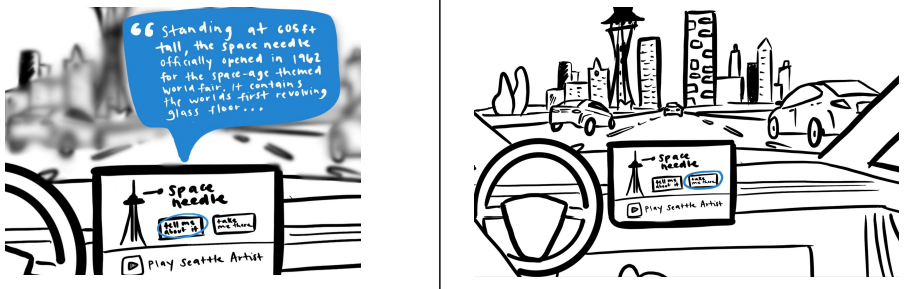
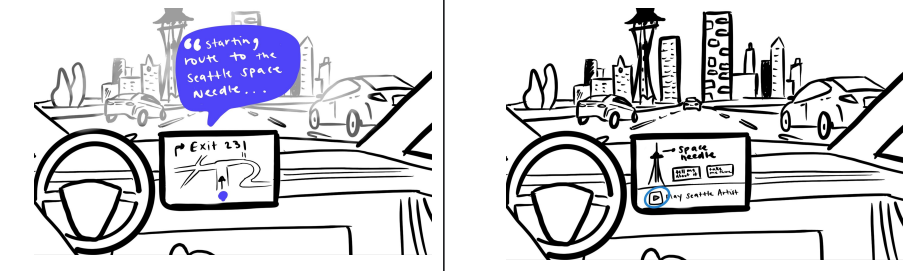
Virtual Tour Guide with AI
Context: Family Vacation
Autonomy Level 3
Feature Explanation:
● Dashboard add on that identifies nearby landmarks
● Music and map integration based on location
Application of Charm: Creates a unique and interactive learning experience for both riders and drivers. They can connect and learn about a place even with little to no experience being there. This can help a family navigate a new place in a fun way.
Immersive Audio Book
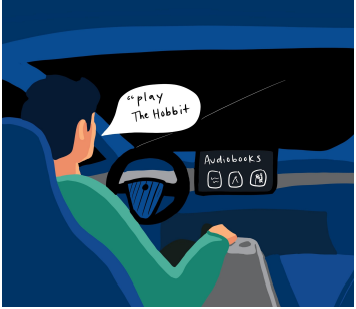
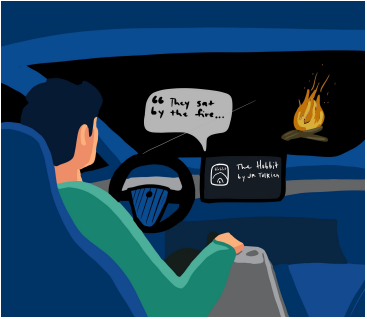
Context: Family Vacation
Autonomy Level 3
Feature Explanation:
● holographic imagery: (moving and stationary) to the passengers
● audio system: surrounds the passengers with realistic background noise and sound effects
Application of Charm: To immerse the driver and passengers in an audiobook through the use of visual holograms and audio to simulate the setting and events of the story. This allows the people to feel as if they’re transported into the world of the book.
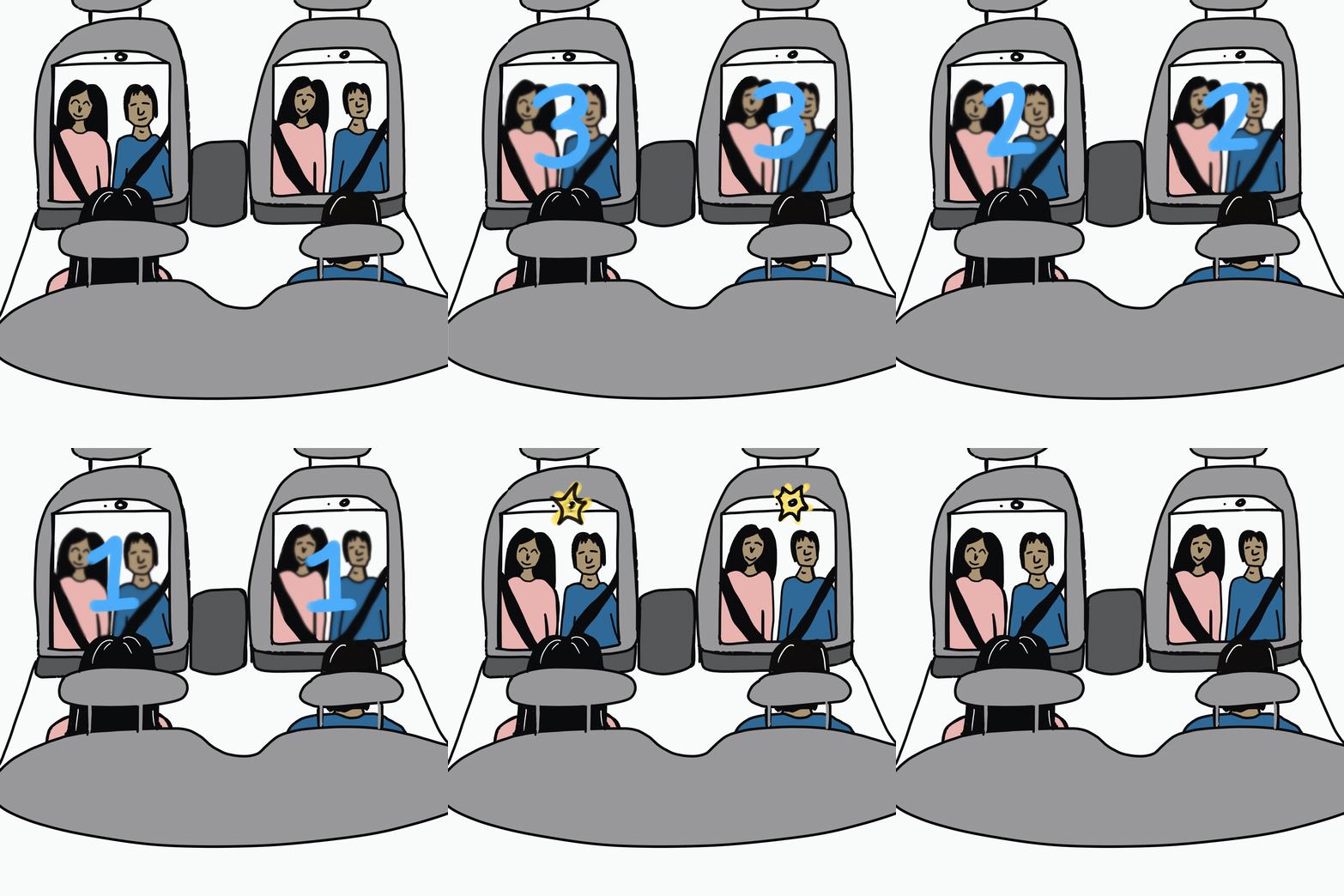
Taxi/Didi Photo Booth
Context: Taxi/Didi Culture
Autonomy Level 2
Feature Explanation:
● Camera: A camera on an arm attached to the roof that can be put in any orientation that the passengers want.
● Screens: The screens are integrated into the back of the front seats and allow riders to choose filters and stickers to add to the photos.
● Phone: You can receive photos from the screens via the rider’s Bluetooth.
○ Charm: Allows riders to share the memories of their night on social networks.
● Printed Photo Ticket: A printed panel of the photos dispenses from the back of the center console for the riders to take when they leave.
○ Charm: Gives riders a physical copy to remember the memories they made.
Application of Charm: Helps riders create memories when they are traveling with others. This creates an entertaining, party vibe for the taxi journey that will help extend the joys of a night out with friends on the way to a party or after leaving a party. It is heavily inspired by photo booths in Asia.
Reflection
This was a once and a lifetime project for me to experience in university in many ways: working on a nearly 20 person design team; rapid bi-weekly scope changes with rapid iteration; unique ways of testing; and lastly working cross-culturally was truly a new perspective from not only a designer view, but from a humanity standpoint. This experience has made me consider working abroad even more than I thought I was initially interested in it.